The Ultimate Guide to Professional Handheld Thermal Imaging Camera in the UK
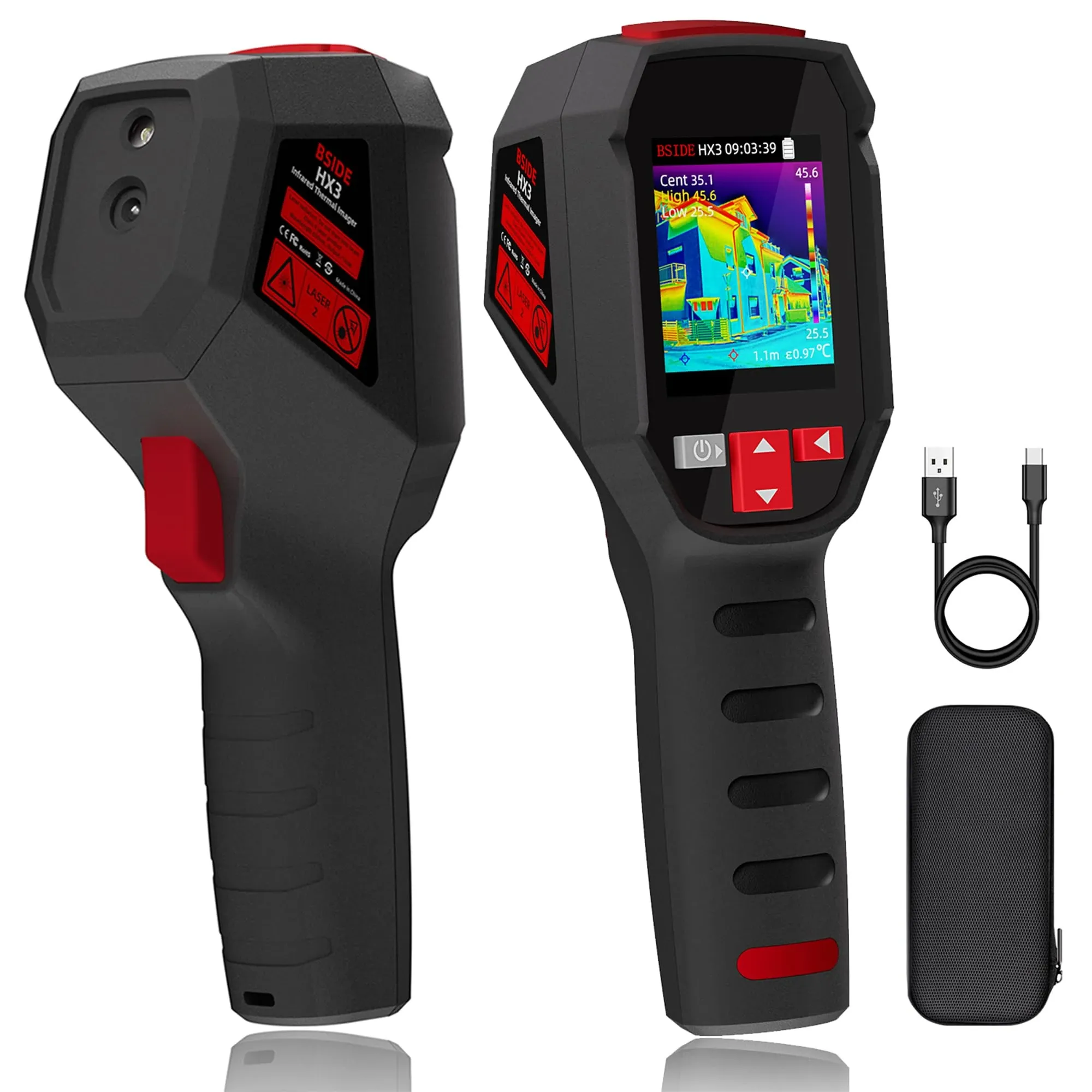
A professional handheld thermal imaging camera is a portable infrared tool designed for serious inspection work, helping UK electricians, heating engineers, surveyors and facilities teams find hidden heat loss, electrical hotspots, moisture issues and mechanical faults quickly and accurately. In practice, the best professional models offer high IR resolution, strong thermal sensitivity, a smooth 25Hz refresh rate and robust reporting features that support day-to-day diagnostics.
TL;DR: If you need a professional handheld thermal imaging camera for UK trade use, prioritise true IR resolution of at least 240x240, NETD below 50mK, a 25Hz refresh rate, adjustable emissivity and durable site-ready construction. Based on our testing, these features make the biggest difference when inspecting consumer units, underfloor heating, damp, insulation defects and commercial plant.
Identifying hidden faults before they escalate into costly failures is now central to modern UK diagnostics. Whether you are tracing a hot neutral in a consumer unit, mapping underfloor pipework or carrying out an EPC-related inspection, relying on guesswork is no longer practical. Instead, a professional handheld thermal imaging camera converts invisible infrared radiation into clear temperature data so you can act with confidence.
However, the market is crowded with low-cost devices that look capable on paper but fall short in real inspection conditions. Therefore, understanding what separates a genuine professional tool from a basic gadget is essential if you want reliable results rather than misleading images.
Key Takeaways
- A true professional handheld thermal imaging camera should typically offer at least 240x240 IR resolution for clear fault identification.
- A 25Hz refresh rate gives smoother live scanning, which is especially useful for moving inspections across plant rooms, roofs and larger properties.
- Low NETD and adjustable emissivity are essential for spotting subtle differences on challenging materials such as copper, steel and plasterboard.
- Thermal imaging supports more informed inspections linked to BS 7671, Part L considerations and wider building maintenance in the UK.
What is a professional handheld thermal imaging camera?
A professional handheld thermal imaging camera is built for repeatable diagnostic work rather than occasional casual use. In other words, it combines a higher-grade infrared sensor with faster image processing, better measurement controls and tougher construction suited to UK site conditions.
Based on our testing, the difference becomes obvious as soon as you start scanning live electrical equipment, wet walls or long pipe runs. Professional units provide cleaner images, more stable readings and better target definition at distance. As a result, they help users make decisions faster and with less uncertainty.
What matters more: infrared resolution or display resolution?
A common buying mistake is confusing screen resolution with actual infrared resolution. The display may look sharp, but the IR sensor determines how many genuine temperature points are being measured. For example, a 240x240 IR sensor records 57,600 individual points of thermal data per frame.
This matters because higher IR resolution improves your ability to inspect small or distant targets. For instance, it becomes much easier to distinguish between adjacent breakers in a distribution board or identify localised heat loss around roof junctions. If you are comparing specifications carefully, our guide on the High Resolution Handheld Thermal Imaging Camera Explained: A UK Buyer's Guide explains how sensor density affects practical inspection performance.
Why is thermal sensitivity important?
Thermal sensitivity, often shown as NETD, measures the smallest temperature difference the camera can detect. Professional models typically achieve less than 50mK. Put simply, the lower the NETD figure, the better the camera is at showing subtle temperature changes.
This is particularly important for building diagnostics in the UK. For example, damp patches behind plasterboard or insulation defects around lintels may only show slight temperature variation. Therefore, a low-NETD camera gives you a clearer chance of identifying early-stage issues before visible damage appears.
Why does refresh rate matter on a handheld thermal camera?
Refresh rate affects how smooth the live image appears while you move the camera. Many lower-cost models operate at 9Hz, which can feel jerky during walk-through surveys or rapid fault-finding. By contrast, a professional handheld thermal imaging camera with a 25Hz refresh rate delivers much smoother real-time viewing.
This makes scanning far more comfortable and accurate when following heating pipes, checking rotating equipment or surveying larger commercial spaces. Consequently, you are less likely to miss short-lived anomalies or misread blurred heat patterns during movement.
What is a professional handheld thermal imaging camera used for?
The value of thermography lies in its versatility. From domestic maintenance to commercial compliance work, it gives UK professionals visual evidence of faults that would otherwise remain hidden. Moreover, it reduces invasive investigation and helps communicate findings clearly to clients.
Can a thermal imaging camera find electrical faults?
Yes — one of the most common uses for a professional handheld thermal imaging camera is identifying abnormal heat in electrical systems. Loose terminations, overloaded circuits and phase imbalance often generate heat before failure occurs. Therefore, thermography can reveal developing problems during planned maintenance rather than after breakdown.
According to UK fire safety data referenced by government sources, electrical distribution systems and appliances remain a significant cause of fires. In practical terms, scanning consumer units and distribution boards helps electricians identify overheating components quickly. Based on our testing, higher-resolution cameras make it much easier to isolate individual hot connections without surrounding pixelation masking the fault.
Multiple colour palettes also help interpretation. For example, Ironbow can be useful for general scanning, while White Hot or Black Hot often provides stronger clarity during electrical inspections by reducing visual distraction.
Can it be used for HVAC diagnostics and underfloor heating?
Yes — heating engineers and plumbers regularly use handheld thermal cameras to trace pipe routes, verify underfloor heating coverage and locate blockages or leaks with minimal disruption. Instead of lifting floors blindly or opening walls unnecessarily, you can often narrow down the problem area within minutes.
Likewise, thermography helps when balancing radiators or investigating poor system performance. Cold areas at the bottom may indicate sludge build-up; cold areas at the top may suggest trapped air. As a result, engineers can recommend targeted remedial work instead of relying on trial and error.
Can it help with building surveys and energy efficiency checks?
A professional handheld thermal imaging camera is widely used in property surveys because it highlights heat loss patterns that are difficult to confirm visually alone. This includes missing insulation, cold bridging around structural elements and failed double-glazing seals.
According to Energy Saving Trust guidance commonly cited in UK retrofit discussions, substantial heat can be lost through poorly insulated walls and roofs. Thermal imagery makes those losses visible during surveys conducted in suitable conditions. Furthermore, evaporating moisture cools surfaces; therefore damp ingress often appears as an identifiable cold signature before staining or mould growth becomes obvious.
For landlords, retrofit professionals and EPC-related assessments, this visual evidence can support more informed recommendations aligned with Part L considerations and broader energy-efficiency objectives across the UK housing stock.
What features should you look for in a professional handheld thermal imaging camera?
A good sensor is only part of the picture. To work effectively on site day after day, a professional device also needs practical features that improve usability, reporting quality and durability.
Do colour palettes really make diagnosis easier?
Yes — different palettes suit different tasks. While Ironbow works well for general building inspections because it gives obvious visual contrast, Rainbow HC can help highlight subtle moisture-related differences. Meanwhile, greyscale options such as White Hot and Black Hot are often preferred for electrical work because they present shapes more clearly.
The advantage of having multiple palette options is flexibility. Consequently, you can adapt your view depending on whether you are checking switchgear in a plant room or tracing insulation gaps in an external wall build-up.
Why do adjustable emissivity settings matter?
No surface emits infrared energy in exactly the same way. Shiny metals such as bare copper or polished steel can produce misleading readings if emissivity settings are not adjusted correctly. Therefore, any truly professional handheld thermal imaging camera should allow emissivity changes so readings better match real conditions.
According to good thermographic practice used across building services inspection work in the UK,* operators should also consider reflections from nearby heat sources and environmental influences such as draughts or solar gain before drawing conclusions from images alone.
h3Can build quality make an impact on day-to-day use?Based on our testing , usability matters almost as much as image quality . A technically strong device becomes frustrating very quickly if menus are awkward , battery life is poor or exported reports take too long to prepare .
Ready to upgrade your diagnostics with ImageColor?
Shop Now — £206.27